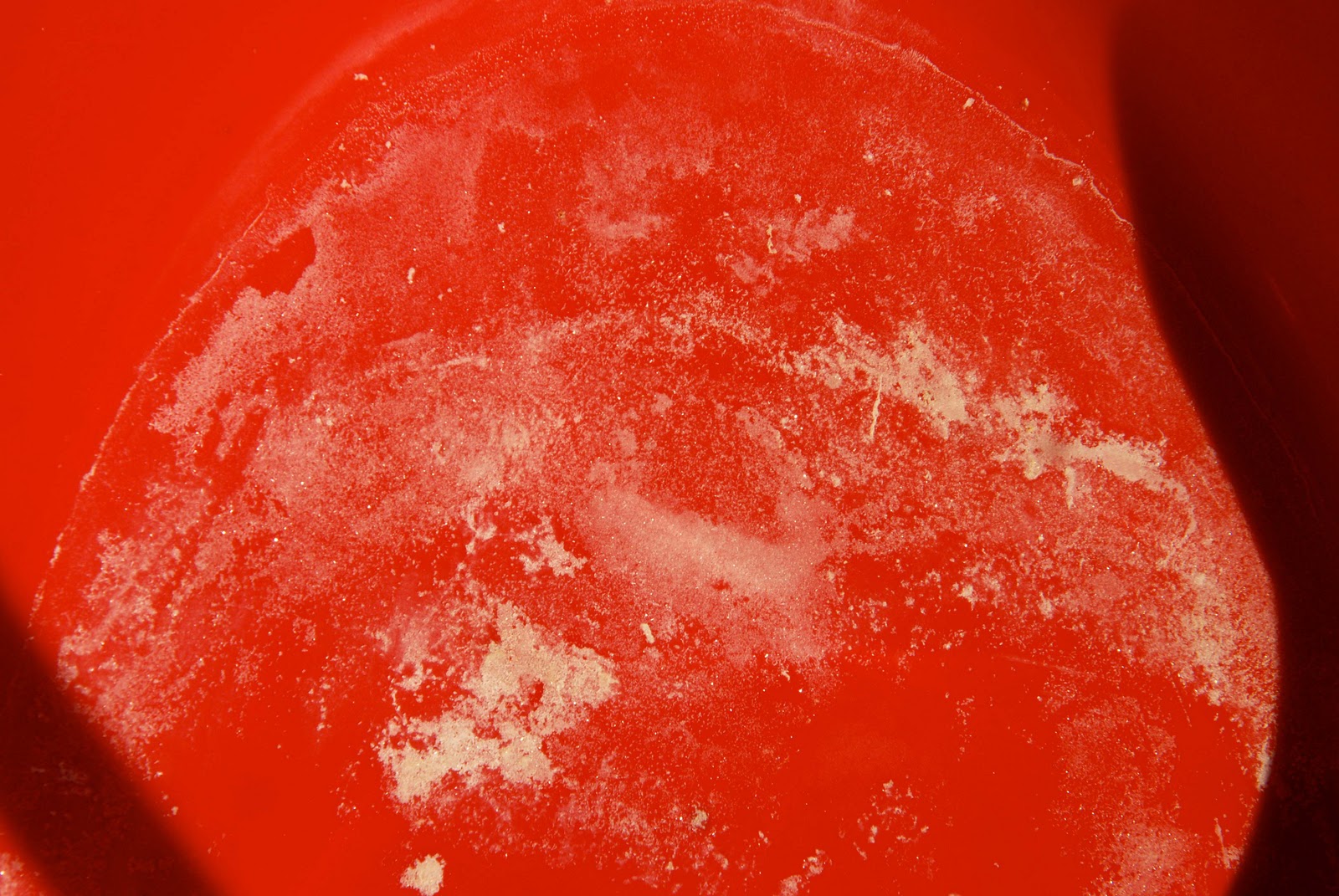
The first week is typically referred to as the honeymoon period, for good reason. In that week, when oxalates are leaving the body fast and furious, the positive effects are clear and bountiful! But like anything else, that provides deep healing from the inside out, the honeymoon period is short lived, as to be expected. The following 8 weeks was nothing short of painful, for all of us!! I've labeled that period of our lives as one of THE most challenging. Just about every symptom they have ever had, came back in that short period of time, magnified! As we were living it, we couldn't see the end in sight. We didn't know that some day, the torture would end and our kids would come out of it glowing. But when they finally did, we knew we could never go back, well, at least I knew that. As is often expected, the spouses who just go with the flow of biomedicine question the validity of the diets, supplements and treatment protocols. Not a bad thing, it encourages balance, and it keeps us honest. But with this, I stood my ground, never losing trust in this important dietary change I chose to make for our boys. Needless to say, after my husband saw the results of Gavin's oxalate dump, he was brought entirely on board with me. There is nothing like witnessing your 30 pound child pee out thousands and thousands of oxalate crystals!!
It's difficult, very difficult, to feed children who are already on such restricted diets, but with some research and experimenting, just like anything else, it became second nature. A person on the LOD cannot eat grains, nuts and many common vegetables and fruits. "Healthy" food choices are a matter of perspective. In our case, spinach, raspberries and almonds, which are highly regarded as superfoods, would be physically harmful to our children.
So what does this all have to do with today's blog entry? I'm sure you have seen my son's oxalate crystals picture in a recent entry. In the process of "trying" a higher oxalate food (green beans!) I have caused my children to begin the dumping process all over again. I don't know, if it will last quite as long as the first one, but as the oxalates leave the cells, there is no shortage of dumping symptoms in our house!! Gavin is experiencing extreme moodiness, he looses the ability to communicate with us, staring at us blankly when we ask him a question, he has multiple potty accidents a day, he easily angers, he continuously tries our patience by doing things he knows are unacceptable (all while watching us for a reaction), he becomes defiant, he is clicking his tongue almost non-stop, and his BMs hurt even though he is not constipated. He also becomes clingy and needy, he whines instead of talking (unless we remind him not to, over and over again) and he has regular belly aches. Some of you are probably thinking, "this sounds like typical kid stuff to me"....it's not. We have seen our children thrive on the LOD and we see the effect of what putting back the higher oxalates foods into the diet does to them. It's simple, cause and effect. If this is "typical" kid stuff around your house, I would encourage you to do some investigating! Children with high oxalate problems become adults with kidney stones and worse. Oh, and one undeniably huge sign for us is constant hunger. When Gavin is dumping oxalates, it's as if he can't get enough food and considering his small stature, I can't imagine where he is putting it or why it doesn't cause him to gain more weight!! I wish it would, that would be the up-side to this frustrating event!! The oxalates must do something to the body that prevents him from using the nutrients in the foods he eats all day.
Susan Owens has been heading up private research into the connection between oxalates and autism for over 15 years. She is part of the Autism One research Think Tank Team. I asked her, if she could explain oxalates to me and I would like to share that explanation here:
Well, this is a whole different thread of autism research, so there is a bit of a learning curve here as there is for all of the different therapies, but let me see what I can do to define some things for you.
Oxalate is a simple but very reactive chemical that plants make in order to defend themselves against insect predators. I saw a presentation in Houston by an oxalate scientist who had modified a plant that caterpillars eat to remove the gene that made oxalate, and after the plant didn't make oxalate, that caterpillar would strip the plant until all that was left was the stick. This caterpillar might start munching on the oxalate-containing version of the plant, but would stop quickly. The scientists dissected the caterpillars who tried to eat the oxalate-containing plant and found their teeth were broken and down to nubs, which is why they stopped eating it!
I guess it is a good thing that not all plants make large amounts of oxalate, or we would have nothing to safely eat!
Our bodies are adapted to eat oxalate when everything is working the way it was designed. Our flora are supposed to have a microbe called oxalobacter formigenes that only eats oxalate and cannot survive on anything else, but it has been frequently killed back by antiobiotics that are used routinely. Also, most of the calcium that enters the gut from food (80%) stays in the colon and it is available to bind free oxalate and that keeps the oxalate from being absorbed in the colon. Casein contains a lot of calcium, so when someone is casein-free, the amount of calcium they get from the rest of the diet is reduced, so there is less calcium there to bind the oxalate that is in the diet. Taking calcium as a supplement before meals helps to remedy or at least help that situation, but timing is everything!
Once oxalate has been absorbed through the colon or through a leaky gut anywhere in the GI tract, it circulates through the blood and can enter cells, especially cells that are looking for sulfate, for it hitches a ride into cells using the sulfate transporter. If you are low in sulfate and high in oxalate, this is a problem!
Once inside cells, oxalate inhibits many enzymes, and almost all enzymes it is known to bind are enzymes that contribute to our energy or mitochondrial function. Key members of that group of inhibited enzymes are the ones that use biotin.
Biotin is a sulfur-containing vitamin that you get both from food and from bacteria that live in the gut. Oxalate inserts itself next to biotin in the active site of these enzymes, and shuts down the operation of the enzyme.
Because of which enzymes are involved, this affects our ability to use glucose, to make glucose, to make ATP, to regulate our fatty acid metabolism, and to run the Krebs cycle.
Scientists learned that the inhibition of these enzymes could be diminished by giving high doses of biotin. What we've learned on our listserve, is that in children with autism who definitely have oxalate issues, sometimes it takes biotin supplements even greater than 20 mgs. a day to overcome the enzyme inhibition.
A lot of the leakiness of the gut goes away when people first remove gluten from the diet. This seems to help many children gain gut integrity so that they won't absorb as much oxalate.
Ordinarily, people only absorb 1-2% of the oxalate in their diet, but if you have a leaky gut, that level can get as high as 50%. A normal diet has about 100 mgs of oxalate per day, so a healthy gut would only absorb 1-2 mgs. An unhealthy gut would absorb as much as 50 mgs. on a normal diet.
With the low oxalate diet, in adults, we cut back the oxalate that is eaten to 40-60 mgs a day, and in children less proportionately. This is not as big a deal as you would think, but it seems a big hurdle if someone has decided that human beings were designed to have spinach as a daily member of the diet!
I have heard of some implementations of SCD, for instance, that may have been as high as 400 mgs/day or four times a normal diet. On gf/cf, the vast majority of oxalate is likely to come from eating too many baked goods (although starch itself is not very high) but whole grains and brans are very high). They also may eat too many chocolate goodies, and way too high a quantity of milk substitutes. Every milk substitute but coconut milk and chestnut milk are very high oxalate, even in just one cup.
I think a lot of this would become much easier to grasp if you read the following mini-paper about the leaky gut that was written for parents and others who are new to all these concepts: www.lowoxalate.
Susan Owens
I will be sending Susan Gavin's oxalate crystals in a baggie. I hope it will help in the advancement of her research!